
Report on the Inaugural Programme of Green Skill Development Programme (GSDP) on Apiculturist (Wild Bee) – NTFP, held on 14 September 2026 Exclusively for Scheduled Tribe (ST) Candidates
Date | 14 September 2026 |
Venue | Central Agricultural University (CAU), Iroisemba, Imphal, Manipur – 795004 |
Organised by | EIACP Hub Manipur, Department of Environment & Climate Change (DoE&CC), Government of Manipur, under the Ministry of Environment, Forest and Climate Change (MoEF&CC), Government of India |
In collaboration with | College of Agriculture, Iroisemba, CAU, Imphal, Manipur |
Programme Overview
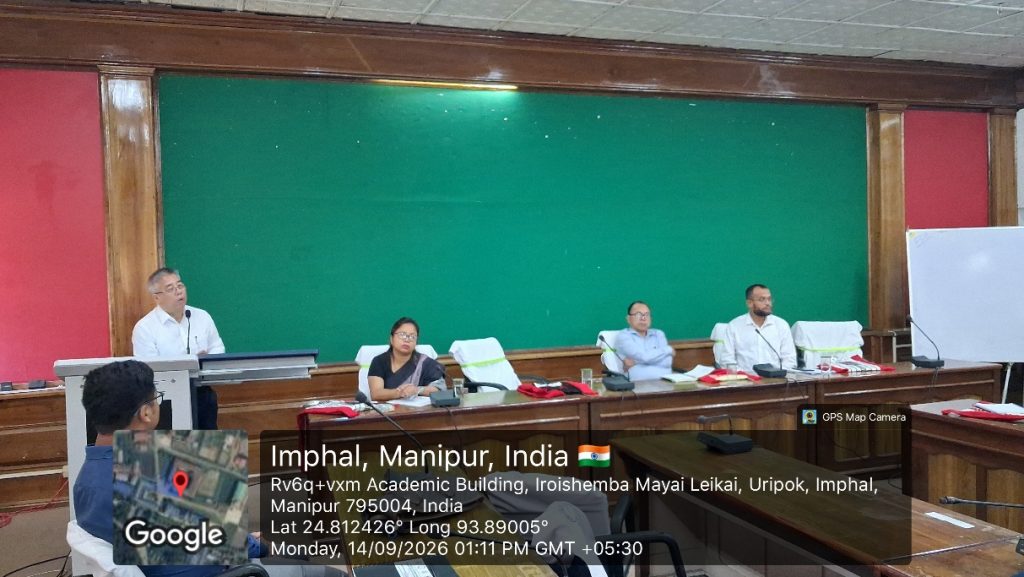
The Green Skill Development Programme (GSDP) on Apiculturist (Wild Bee) – NTFP, exclusively for Scheduled Tribe (ST) candidates, was formally inaugurated on 14 September 2026 at the Central Agricultural University (CAU), Iroisemba, Imphal.
The programme is being organised by the EIACP Hub Manipur, Department of Environment & Climate Change, Government of Manipur, under the Ministry of Environment, Forest and Climate Change (MoEF&CC), Government of India, in collaboration with the College of Agriculture, Iroisemba, Central Agricultural University, Imphal.
The training programme is intended to equip the participating ST candidates with knowledge and practical skills relating to wild bees, pollination, honey production, biodiversity conservation and sustainable livelihood opportunities.
Inaugural Programme
The inaugural programme marked the formal commencement of the GSDP training course. It was attended by officials of the Department of Environment & Climate Change, experts from Central Agricultural University and the participating trainees.
Dr. Mayanglambam Muni Singh, JRO, Department of Environment & Climate Change, served as the host of the inaugural programme. The programme included introductory remarks, briefing on the objectives of GSDP, interaction with the trainees and addresses by experts and senior officers.
Expert Address by Dr. Pukhram Bhumita
Dr. Pukhram Bhumita, Assistant Professor, Integrated Bee Development Centre (IBDC), CAU, delivered an expert talk on wild bees and sustainable apiculture.
She highlighted locally important wild bees, particularly Heiyang Khoi and Khoiren, and also discussed the bumblebee locally known as Khoimu. She explained the ecological importance of bees as pollinators and their contribution to honey production and maintenance of ecological balance. She further explained the contribution of bee activity to mustard cultivation, including improvement in seed development and oil content.
Her address also covered the history of beekeeping, characteristics of local bees, multiflora honey, different varieties of honey and their distinctive properties and potential medicinal uses. The session provided the trainees with an introductory understanding of wild bee management and the opportunities associated with sustainable apiculture.
Dr. Mohd. Habibullah Khan, Environment Officer, Department of Environment & Climate Change and Coordinator, EIACP Hub Manipur, briefed the participants on the objectives, scope and significance of the GSDP on Apiculturist (Wild Bee).
He highlighted the importance of green skill development for creating sustainable livelihood opportunities while contributing to environmental conservation. He discussed the changing status of biodiversity and encouraged the trainees to make full use of the training programme to acquire practical skills that could subsequently be translated into livelihood and entrepreneurial opportunities.
He also highlighted the interconnectedness of forests, natural water sources, biodiversity and pollinators, explaining how deforestation and the drying up of natural springs can adversely affect ecosystems and bee populations. The participants were encouraged to connect pollinator conservation and sustainable lifestyles with Mission LiFE activities at the grassroots level.
The entrepreneurship potential of honey production and value addition was also highlighted, encouraging the trainees to view apiculture not merely as a training activity but as a potential source of sustainable livelihood.
S.K. Gainaimei, Environment Officer, Department of Environment & Climate Change, Government of Manipur, interacted with the trainees and encouraged them to participate actively throughout the course.
He emphasised sincerity, dedication and continuous learning and encouraged the participants to utilise the knowledge and practical skills acquired through the programme for developing sustainable livelihood opportunities in apiculture.
Address by Dr. T. Brajakumar, Director
Dr. T. Brajakumar, Director, Department of Environment & Climate Change, Government of Manipur, addressed the participants and highlighted the growing pressures of urbanisation and other human activities on pollinators and natural ecosystems.
He emphasised the importance of green skilling as an emerging area of skill development and referred to opportunities in green entrepreneurship, green architecture and plant- and nature-based skills. He observed that human well-being is intrinsically linked with healthy ecosystems and that disruption of natural processes can have adverse consequences for biodiversity as well as society.
He encouraged the trainees to actively participate in the programme and to regard the skills acquired through GSDP as both a means of livelihood generation and environmental stewardship.
Distribution of Training Materials
As part of the inaugural programme, Trainer’s Guidebooks and Trainee’s Handbooks were distributed to the participants and resource experts. Eco-friendly bags bearing the GSDP sticker, along with pens and notepads, were also distributed. TA/DA was provided to eligible participants in accordance with the applicable programme guidelines.
Conclusion
The inaugural programme successfully marked the commencement of the Green Skill Development Programme on Apiculturist (Wild Bee) – NTFP. The inaugural addresses and expert interaction introduced the trainees to the ecological importance of wild bees, pollinator conservation, biodiversity protection, sustainable utilisation of natural resources and the livelihood and entrepreneurial potential of apiculture.
The programme also highlighted the importance of integrating traditional ecological knowledge, green skills, Mission LiFE and sustainable livelihood practices, particularly for strengthening livelihood opportunities among the participating Scheduled Tribe candidates.
The inauguration thus provided an appropriate foundation for the technical, practical and field-oriented training sessions to be conducted during the subsequent course of the GSDP.
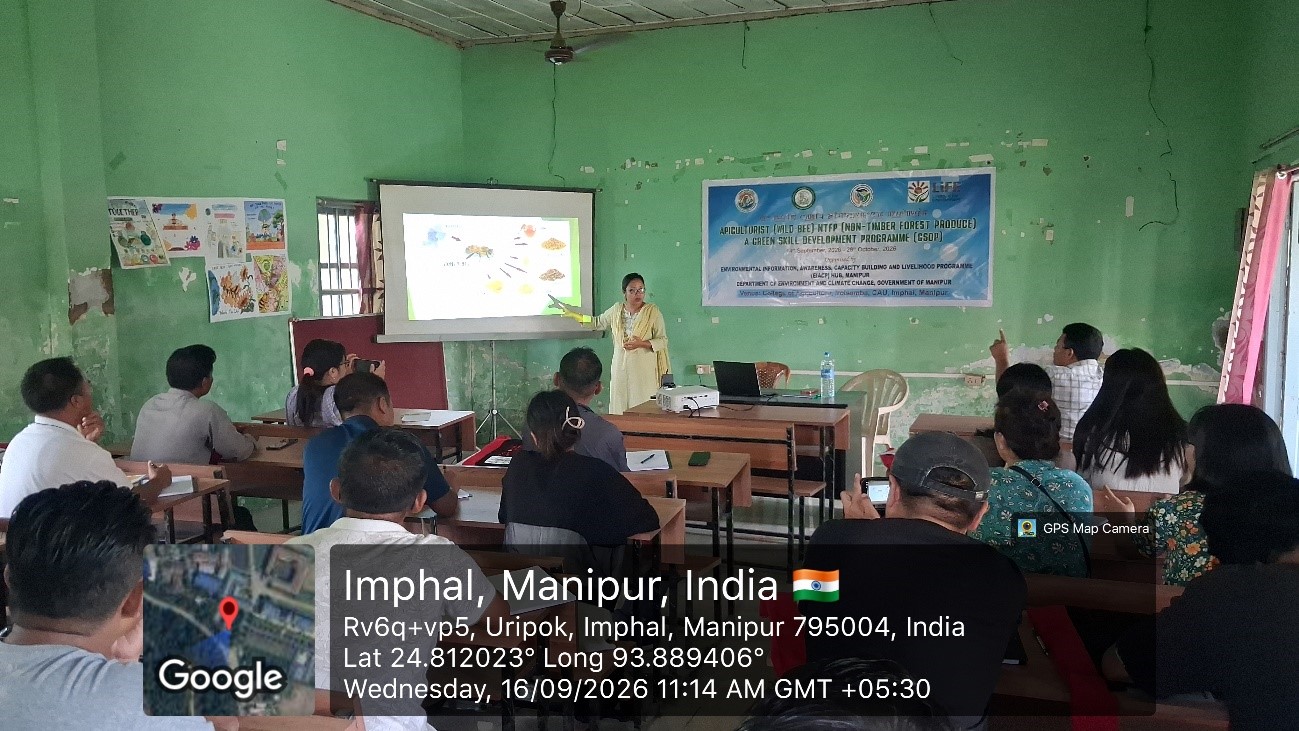
Day 3 – Technical Training Session - 16 September 2026
Certificate Course on “Apiculturist (Wild Bee) – NTFP” for ST Candidates